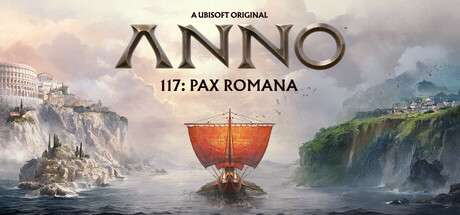
Anno 117: Pax Romana does a lot of things well. The Roman setting is a first for the series and it wears the toga convincingly, from togate senators wandering the forum to Latin flavor text on every trade good. Provincial expansion across Latium and Albion gives the map a real sense of place, and the trade routing between provinces still has the layered supply-chain puzzle the series is known for. The Prophecies of Ash DLC has pulled a lot of players back in, and the volcano mechanics are legitimately interesting.
But the base game is polarizing. The late-game economy asks you to babysit dozens of production chains, the roadmap of paid content is already priced beyond what most builder fans want to spend in a year, and single-region maps get repetitive fast. If you bounced off, are waiting for the next DLC drop, or just want something lighter to alternate with, these seven games are what people on the Anno subreddit and Steam forums actually keep playing.
Quick comparison
| Game | Best for | Setting era | Base price | Standout feature | Free demo |
|---|---|---|---|---|---|
| Anno 1800 | Closest Anno replacement | Industrial 1800s | Full-price release | Trade network depth | Yes |
| Cities: Skylines II | Modern city planning | Present day | Full-price release | Traffic and zoning simulation | No |
| Manor Lords | Medieval town-building | 14th century | Mid-tier | Organic town growth | No |
| Foundation | Grid-free village layout | Medieval | Mid-tier | Free-form road placement | Yes |
| Ostriv | Deep single-village sim | 18th century | Budget price | No combat, pure economy | Yes |
| Songs of Syx | Massive-scale empires | Fantasy classical | Budget price | 10,000+ citizens on screen | Yes |
| Farthest Frontier | Survival builder with combat | Medieval | Mid-tier | Raids and disease systems | No |
Why people leave Anno 117
The complaints are consistent across the community, and they cluster around five points.
DLC cadence. The Year 1 Pass, the Prophecies of Ash release, and the announced season pass stack up quickly. Committing to Anno 117 long-term is a several-hundred-euro proposition, and that math is what pushes a lot of players toward one-and-done alternatives.
Economy micro-management. The province-stacking that makes the late-game satisfying is also what makes the campaign a chore. By mid-Albion, most sessions become spreadsheet triage rather than city-building.
Roman-only setting. No faction variety, no naval colonial arc, no wildly different biomes. After 40 hours, the visual palette starts to blur.
Performance. Crowded provinces bring even high-end CPUs to their knees. The engine handles individual buildings well, but full trade networks with active citizens are punishing on anything below a current-gen chip.
Multiplayer thin. Four-player co-op exists, but the systems don’t really reward cooperation. Most sessions devolve into parallel single-player games on the same map.
The 7 alternatives
1. Anno 1800
Still the peak of the series for most veterans. The industrial-revolution setting gives you tourism, tenement housing, oil, and a proper old-world / new-world dynamic that Anno 117 flattens. The trade network has more moving parts, the modding scene is mature, and the DLC catalogue is finally complete, so you can buy the full package during a Steam sale for the price of two Anno 117 expansions.
Where it falls short: the UI shows its age, and if you already played it to death, the return trip won’t feel fresh.
Migrating from Anno 117: everything transfers. Same production-chain thinking, same trade-route interface, same feedback loop. You will be productive in an hour.
Download: Steam
Bottom line: if you want more Anno while waiting for the next 117 DLC, this is the answer.
2. Cities: Skylines II
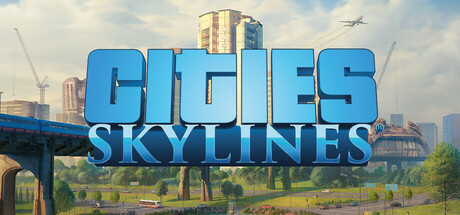
Not a historical builder at all, but the closest thing on the market to a pure planning simulator. Cities: Skylines II replaces production chains with traffic modelling, zoning density, and public services. If what you liked in Anno was the layout puzzle rather than the trade routing, this scratches that itch harder than any period-set game.
Where it falls short: the launch was rough, and even after a year of patches, performance on very large cities is still uneven. Economy simulation is thinner than the original Skylines.
Migrating from Anno 117: expect a mental gear-shift. There are no provinces, no ships, no export markets. Just one city, growing.
Download: Steam
Bottom line: pick this if you keep pausing Anno to redesign your road grid.
3. Manor Lords
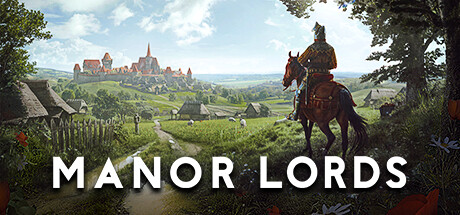
Manor Lords is the medieval town-builder that broke out in 2024 and is still one of the top-selling city-builders on Steam. Solo-dev polish, a tight scope, and a light RTS combat layer for optional battles. Towns grow organically along terrain rather than snapping to a grid, and the visual identity is unmistakable.
Where it falls short: it is still in early access, feature-complete for what it promises but shorter than Anno at 30 to 50 hours per run. Late-game content is thin.
Migrating from Anno 117: much more approachable. One region, a handful of production chains, and the game tells you when something breaks.
Download: Steam
Bottom line: the best short-session city-builder on desktop right now.
4. Foundation
Foundation is the grid-free medieval town-builder that Anno players consistently recommend to newcomers. Instead of stamping a plot outline, you paint zones, and residents build cottages along whatever roads they organically wear into the terrain. The result feels more like watching a settlement grow than assembling one.
Where it falls short: the simulation is shallower than Anno. Production chains exist but they are not the puzzle. Combat is minimal, resource pressure is low.
Migrating from Anno 117: expect fewer spreadsheets and more atmosphere. This is a builder you play at 2x speed with music on.
Download: Steam
Bottom line: the most beautiful town-builder on this list, and the most relaxing.
5. Ostriv
Ostriv is an 18th-century Ukrainian village simulator built by a single developer over the better part of a decade. There is no combat, no external threat, no DLC arms race. Just the deepest citizen-and-resource simulation you can find in the genre.
Where it falls short: the visuals are functional rather than striking, the pace is slow by design, and the tutorialisation asks a lot of you. Not a game to start at midnight.
Migrating from Anno 117: this is what you play when Anno’s economy loops feel too shallow. Every citizen has a job, a home, a family, and preferences. Fields need to lie fallow. Bread depends on windmills that need wind.
Download: Steam
Bottom line: the sim-heavy end of the spectrum, sold at a budget price and quietly one of the best-value builders on Steam.
6. Songs of Syx
Songs of Syx looks like a Dwarf Fortress cousin and plays like nothing else on the market. It is a fantasy-classical empire builder where a single city can host tens of thousands of citizens on screen, all simulated individually. Multi-race populations, diplomacy, and full battles between armies of hundreds.
Where it falls short: the UI is genuinely difficult. First hour is painful and the graphics will not sell anyone on it. This is a game you learn from a YouTube playthrough, not from the tutorial.
Migrating from Anno 117: the closest thing to Anno’s late-game province-stacking, but at 10x the scale and half the graphical fidelity.
Download: Steam
Bottom line: if you love Anno for the scale, nothing else on desktop scratches this itch.
7. Farthest Frontier
Farthest Frontier is a medieval survival-builder from the Grim Dawn studio, and it wears those RPG-studio genes well. Villagers get sick, raiders show up on your borders, crops fail, and winter is a real event. Combat is faster and more meaningful than Anno’s, which mostly happens at sea.
Where it falls short: it is smaller in scope than Anno. One town, one map, one campaign structure. Replayability comes from difficulty settings rather than fresh content.
Migrating from Anno 117: expect production chains you can actually memorise, plus a survival layer that Anno completely lacks.
Download: Steam
Bottom line: the pick if you want stakes. Anno rewards optimisation; this one punishes distraction.
How to choose
We tested all seven against a simple question: what pulled us away from Anno 117, and what actually kept us playing after the novelty wore off?
If you want the closest Anno replacement, buy Anno 1800. The systems overlap by 80%, the DLC arc is finished, and any Steam sale drops the full package below the price of Anno 117’s season pass. It is the single best value on this list.
If pure city-planning is what you love, Cities: Skylines II gives you a road network and traffic simulation with no historical scaffolding in the way. Skip it if the launch reputation still worries you and grab the original Cities: Skylines instead. Both are excellent.
If you want a game you can finish in a single long weekend, Manor Lords is the answer. Tight scope, beautiful presentation, and a real ending.
If you want the deepest simulation on this page, Ostriv wins on every axis except visuals. The learning curve is real but the reward is a village that feels genuinely alive.
If you want scale, Songs of Syx is unmatched. No other builder on desktop puts 30,000 simulated citizens on your screen for a budget-price entry fee.
Stay on Anno 117 if the Roman setting is doing real work for you, you enjoy the trade-route puzzle for its own sake, and you are willing to spend on the season pass. The next 12 months of DLC will keep expanding the map and adding provinces. For everyone else, the alternatives above cover the same design space at a lower long-term cost.
FAQ
Is Anno 117 worth buying in 2026?
Yes if you love the series and the Roman setting appeals to you. The base game is solid, and the Prophecies of Ash DLC adds meaningful late-game content. Skip it for now if you already own Anno 1800 and are not sure the setting justifies restarting from scratch. Wait for a Steam sale in that case.
Which Anno game is best for beginners?
Anno 1800. The tutorial is thorough, the systems introduce themselves in a sensible order, and the industrial setting is more familiar to newcomers than either the Roman setting of 117 or the far-future settings of the older 2000 series entries.
Is Manor Lords finished?
Not yet. It is still in early access, but it is feature-complete for what the developer promised at launch. Ongoing patches are adding polish, seasonal events, and combat improvements rather than fundamental systems. It plays like a finished game with occasional rough edges.
Does Cities: Skylines II run better than Anno 117?
Roughly comparable on modern hardware. Both games are CPU-bound in their late stages, and both benefit more from a fast processor than a top-tier GPU. Skylines II has had a rougher optimisation history but has improved substantially through patches. Anno 117 is smoother at launch but chokes harder once provinces fill up.
Is there a Steam Deck-friendly Anno alternative?
Manor Lords and Ostriv both run well on the Steam Deck at 30 FPS. Foundation is playable with some settings tweaks. Anno 117 itself is technically playable but the UI is designed for a mouse and the province-management screens are painful on a 7-inch display. Songs of Syx runs but the small UI text makes it a stretch.
Can any of these be modded?
Anno 1800 has the deepest modding scene, with hundreds of quality-of-life and content mods available on Nexus and the official mod hub. Cities: Skylines II has Paradox Mods built in. The other titles support mods to varying degrees, but Anno 1800 is the clear leader if modding matters to you.